
Training Myths
There are many paths to Rome in lifting, but some are just better if you're looking to build a big and strong physique.

Back in the 80’s and 90s there was no social media.
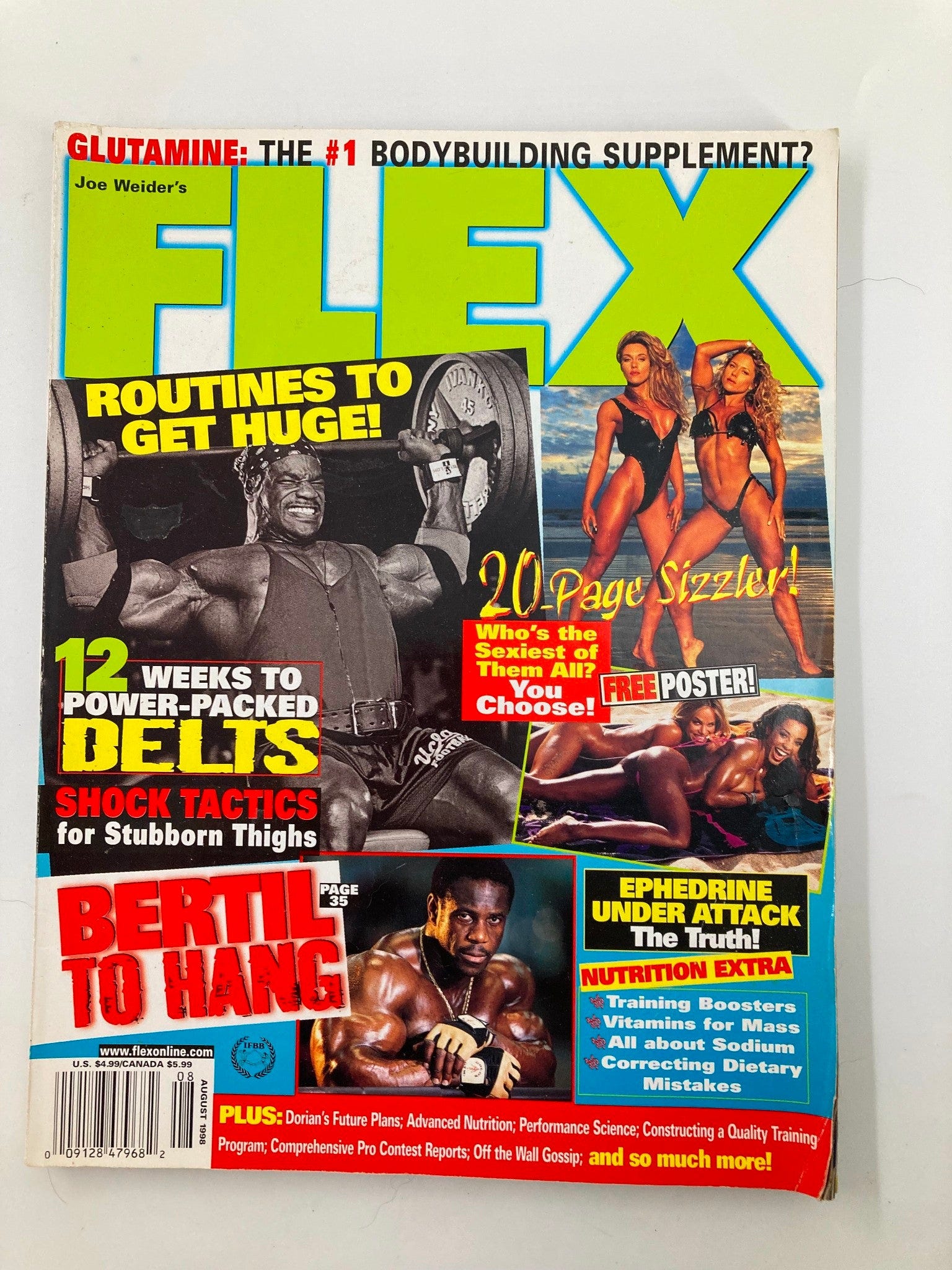
Fitness enthusiasts waited each month for the latest issues of Flex Magazine and Muscle & Fitness to READ about what our favorite bodybuilders were doing, everything from their diet and training routines to what supplements they were taking.
In the 2010s, more information became democratized through forums, Facebook, and Reddit. “Evidence-based fitness” would later on become the paradigm, as research started to gain traction in fitness discourse.
And now, we face a problem in this industry with people having too much information algorithmically being injected into their feeds and having no idea how to use it to reach their goals faster. People may know more about exercise science than bodybuilders of the past but don’t look the part.
Unlimited access to social media has removed the entry requirement for respect. Anyone can speak, and most do loudly with zero education and zero results.
The algorithm doesn’t reward competence; it rewards confidence, controversy, and repetition.
So you get people who have never built a physique, never built a list of client success stories, never repeated an outcome, lecturing those who have and cultivating their own echo chambers of followers who worship everything they say.
Attention-seeking becomes the substitute for achievement.
In this day and age, how you piece together information matters far more than the information you receive. How you iterate that should be driven by principles, as you’ll find no shortage of divergent and compelling voices that drown out the simplicity of what it takes to build a great physique.
With regards to hypertrophy, there generally needs to be a:
1) Training strategy
2) Diet strategy
3 Supplement strategy
4) Pharmaceutical strategy
5) Sleep strategy
6) Lifestyle strategy
7) And stress management strategy put in place.
From there, the methods of executing this strategy unfold based on the contexts of your training environment and life backdrop.
There is almost nothing in the training space that you can’t figure out on your own through self-experimentation once you equip yourself with enough foundational knowledge and understanding of training models. This was a realization I should have come to much earlier in my training journey that happened after graduating from my Master’s program.
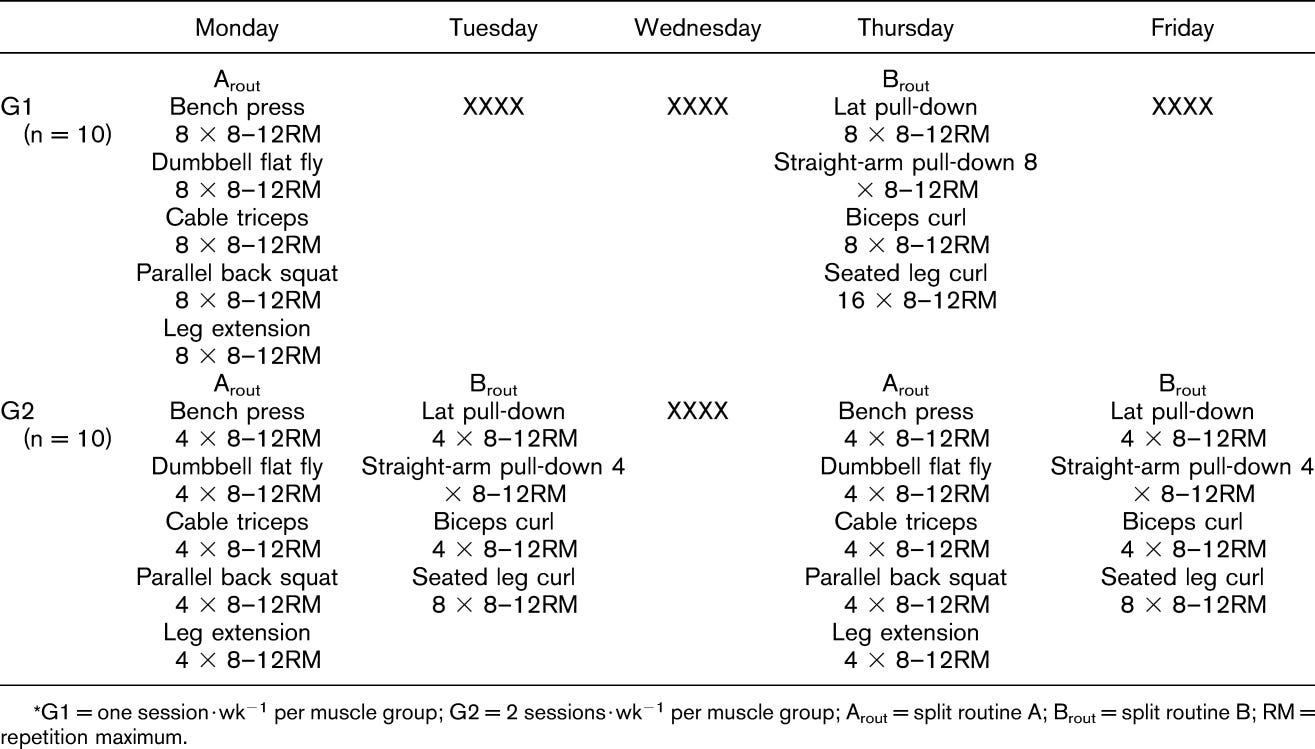
The problem with academics is that they approach training as theorists, building models from generalized research on trainees that don’t resemble you at all at any level. Just look at the average training program you’d be asked to perform as a research participant:
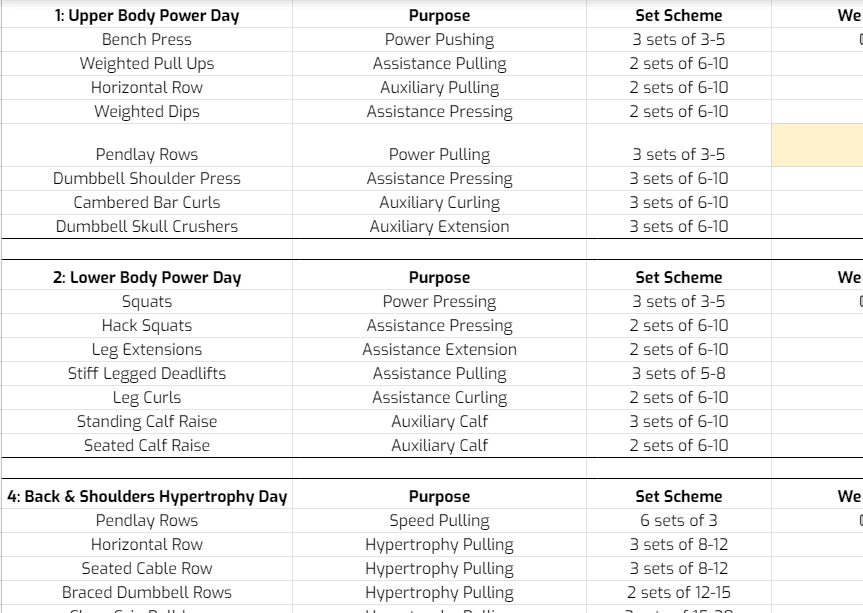
Versus what most people do in real life:
Meanwhile, bodybuilders and strength coaches understand it from lived experience at the physical extremes.
Science is incredibly valuable, but it’s the artful application of science is what will allow you to make progress faster than you thought possible. It should serve as a frame of reference, not a rulebook.
I spent most of my lifting career chasing strength goals before shifting my focus into my physique and health, and made tons of mistakes along the way. I wouldn’t want anyone else to experience stagnation despite the efforts invested.
So in this article, I will break down several training myths I have encountered over the last few years that will help guide your understanding of training for strength and hypertrophy and ultimately help you make faster gains.
Myth #1: Cardio Antagonizes Strength and Size Gains.
It’s the complete opposite.
From about 2005-2015, there was an anti-cardio trend in the fitness industry, similar to how there is now an anti-vegetable trend being spearheaded by carnivore diet zealots on social media (don’t ask them about their lipid profiles).
Cardio was declared a waste of time. Anything that lasted longer than 20 minutes would make you lose muscle mass they said.
This myth was formulated on the molecular basis by which cardiovascular training signaled adaptation in the body.
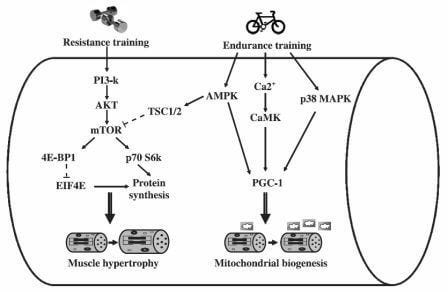
When we look at training outcomes on a molecular level, we can see that cardiovascular adaptations are at relative odds with strength and hypertrophic adaptations. There’s a reason you don’t see 300-pound guys running marathons.
Despite this being fundamentally true, the extent to which we can “train across the spectrum” with good results is vastly underappreciated.
The interference phenomenon is often the “evidence-guided” justification for hyper-regimented training plans, such as Block Periodization. While these plans can work really well in the short term for highly specialized goals, they typically leave individuals relatively undertrained in areas that are supportive of (and even mutually co-dependent with) the primary objective.
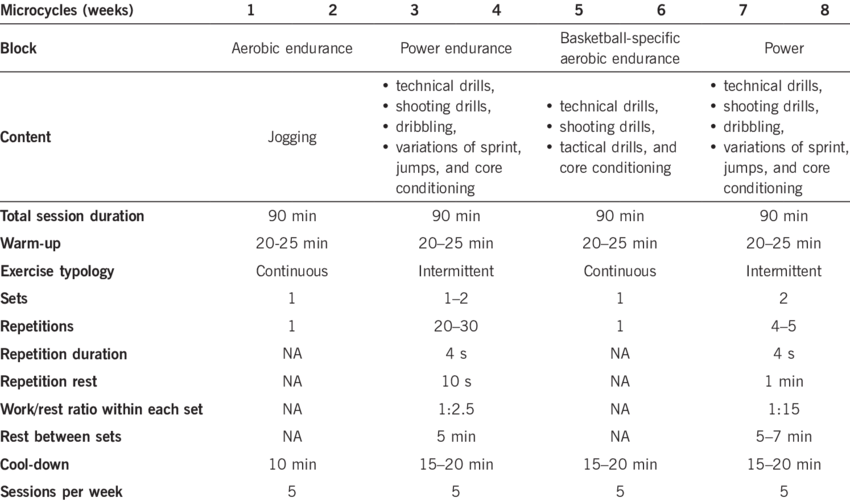
Think football: you need to be an absolute unit on multiple fronts, following a Block Periodization model when you realistically have only a couple of months to train as a team would be inferior to a more concurrent model where conditioning, strength, and explosiveness are all developed within the same timeframe. In other words, you only have 3-6 months to make those men squat, bench press, and power clean huge weight while making them speed demons on the turf and keeping them reasonably lean. You don’t have time to give all of those their own 4-6 week long phases of specialization.
I adamantly believe cardio helps you build more muscle and strength in the long run when implemented correctly.
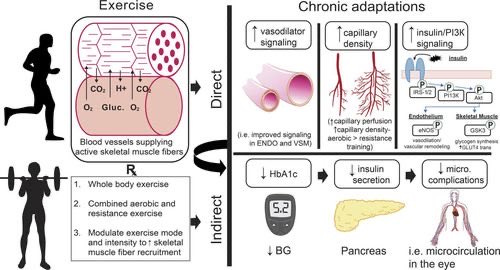
Some of the positive adaptations to cardio are:
1. Increasing blood flow and vasodilation.
2. Increasing oxygen delivery to muscles
3. Increasing capillary density
4. Faster force recovery between sets.
Hydrogen ions (H+) will accumulate when you train intense.
H+ can interfere with myosin and actin binding. This can cause force to drop.
Augmented blood flow, vasodilation, oxygen delivery to muscles, and capillary density allow for more efficient H+ clearance from the muscles when the set ends.
A slight investment with 15-20 min of cardio a few times per week can pay off with a big appetite boost via ghrelin allowing you to push food higher and enjoy eating more throughout a massing phase.
If you've ever been 2-3 months deep into a massing phase, you know how difficult it can be to sustain the snackage.
Adding cardio makes it easier to keep eating, growing, and thriving.
Myth #2: Volume is THE Driver of Hypertrophy
To summarize hours of reading, here’s how lifting results in muscle growth:
When we lift, we generate force.
Muscles get strained as a result (force-induced strain).
We sense this force and subsequent force-induced strain.
We convert cues from the physical environment into biochemical signaling (mechanotransduction).
As a result, protein synthesis goes up and muscle tissue gets built.
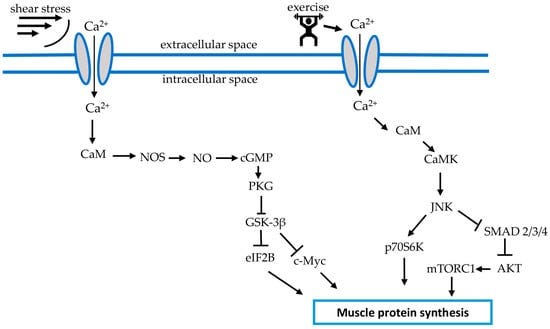
In other words, you must speak loud enough for the recipient to hear the instructions, and once they hear the message, then action can occur as a result. If the recipient doesn’t hear the message, even if you repeat it a thousand times, then nothing happens.
We’re using weights to yell instructions to the muscle cells telling them to grow.
I believe many people fail do not see the progress they want to see because they are not doing enough QUALITY work.
In the end, training hard consistently will trump whatever programming strategies you use, but if the goal is to count to $1000, wouldn’t racking up $100 bills be more effective than trying to count $5 bills?
Many workouts will have 3-5 working sets and multiple exercises for the same muscle group, along with shorter (1-2 minute) rest periods.
Here’s the problem with doing the standard 3 x 10 approach to exercises while keeping the same weight each set (or barely making meaningful increases) to meet the rep target each set:
How many of those sets were actually challenging you enough?
Generally, if a set is challenging enough, then you would have been able to do 1-2 more reps after your last rep of the set (you intentionally don’t do the next 1-2 reps).
Additionally, after a challenging set, you shouldn’t be able to repeat the same amount of reps in the next set.
For example:
You hit 12 reps on your first set, and then using the same weight for the next two sets and resting long enough, you hit 9 reps on the second set, and then 8 on the third.
Too many people will sandbag their sets when they focus on sticking to a static rep range. Don’t count the sets you’re doing, make the sets count.
Myth #3: Fat Loss Workouts
In the name of getting toned, people often attempt to turn weight training into cardio with circuit training, doing 3-4 consecutive exercises with light weight, high reps, and no breaks in between. I think this is one of the biggest mistakes when it comes to fat loss.
Lifting heavy burns more calories when you’re under the load and creates a much larger protein synthesis response post workout than lifting light; a greater growth signal can translate to more gains over time.
Having more muscle makes it easier to burn calories as muscle is metabolically active tissue. Having a larger increase in protein synthesis post workout can also facilitate calorie burning because growth demands energy; each pound of muscle you build burns about 6 calories per day at rest.
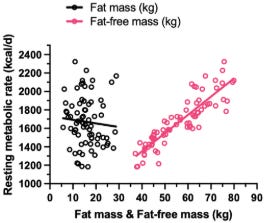
Strength training is essentially building up your body’s high-yield savings bank account:
Instead of working really hard to burn as many calories as possible in one hour, you are building up a calorie-burning machine that works 24 hours and gradually yields you more returns over time.
This is compounding interest for your metabolism that sets you up for lasting success.
And even better, gradually more freedom to live life without neurotically tracking your calories and worrying about eating out with friends and family.
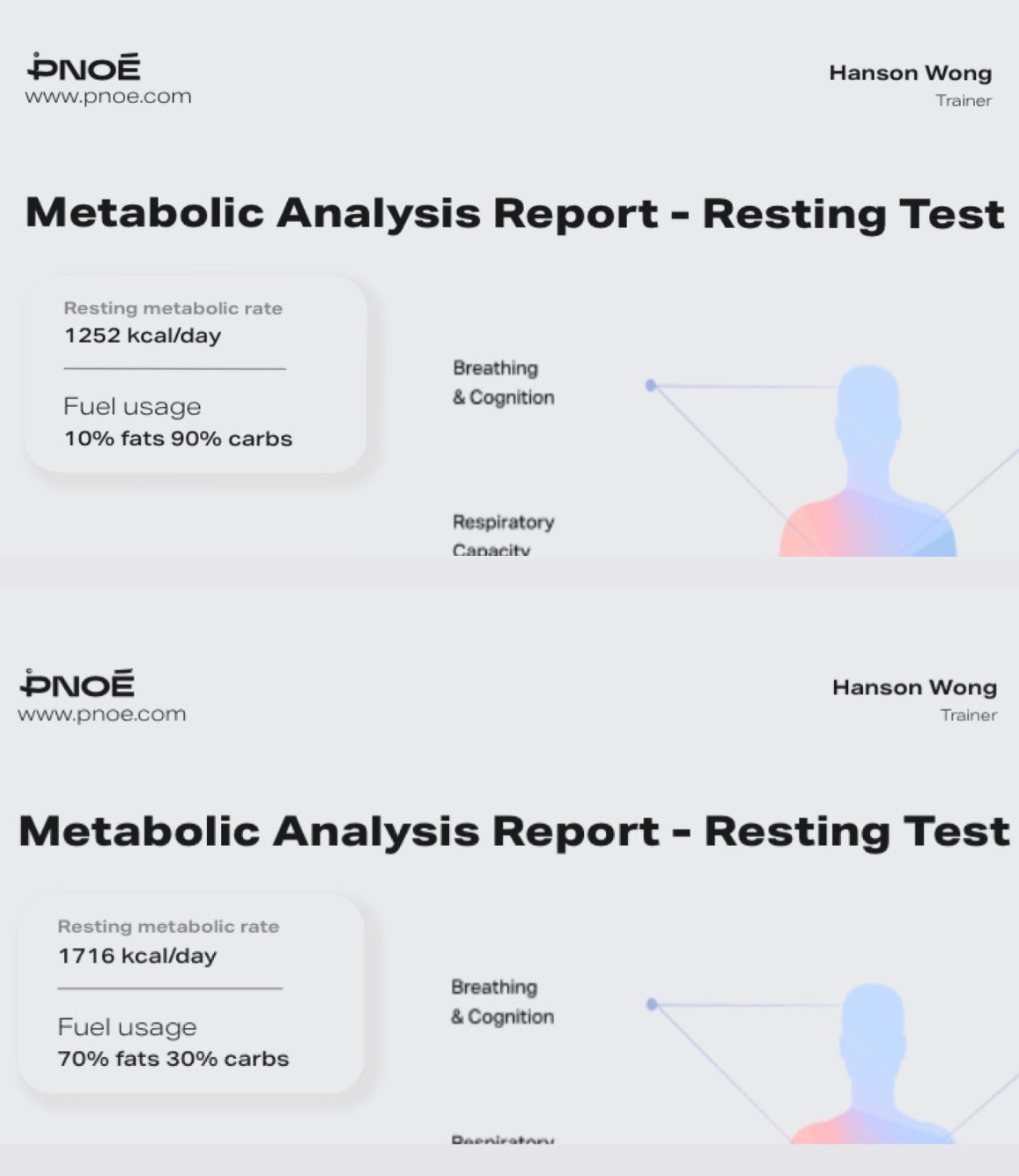
Here’s what’s possible for sometime working a full-time job lifting weights three times a week and not following a restrictive calorie deficit:
He went from burning 1252 calories per day to 1716.
And a greater percentage of those calories were coming from fat as a fuel source (from 10% to 70%).
All of which was driven largely by the type of bodybuilding-style training that isn’t considered “functional.”
Myth #4: Machines Aren’t “Functional”
Machines, and bodybuilding as a whole, get a bad rap because they are supposedly “not functional.”
This is mainly because you are moving resistance in fixed positions and the machines cannot accommodate for everyone’s individual anatomical difference.
For example, a shorter person will not be able to squat as deep as a taller person on the same hack squat machine.
In the end, for something to be functional, it simply has to directly improve the task you want to improve. People tend to confuse “functional” with athleticism.
If your goal is to look your best, machines can only help you. To make muscles bigger, we need to apply sufficient, directed tension to a target muscle.
Well-designed machines can directly target a muscle group without other muscles and/or your mobility being limiting factors because they provide a standardized set-up and movement path.
In contrast, free weights require more stabilization, engaging other parts of the body.
Because of this, well-designed machines tend to apply much more directed mechanical tension on a target muscle.
And they’re safer too.
For the intended purpose, that sounds pretty functional.
I’ll illustrate my point with a tall person:
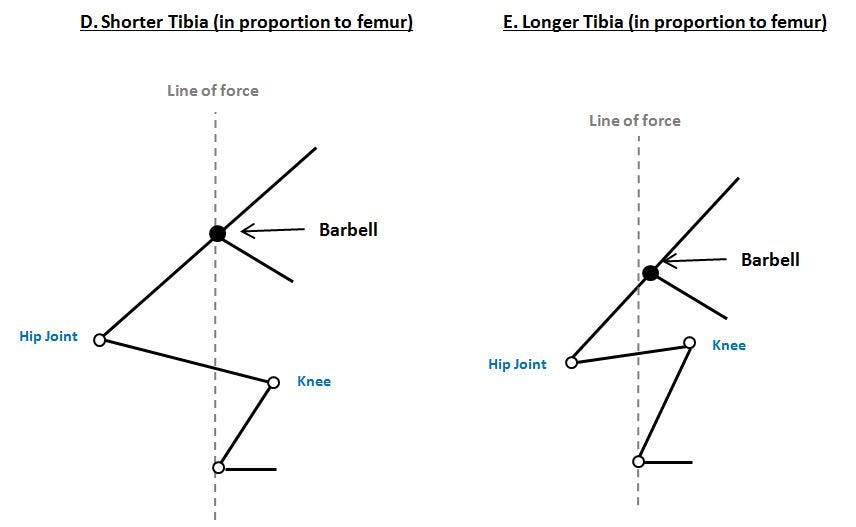
Back squats are a great exercise to build the legs and glutes for most people, but for someone much taller, I would recommend Hack Squats or even better, Pendulum Squats instead.
For someone who is say 6’6 they would have to lean over quite a bit to reach depth as illustrated above.
Is that bad? Not necessarily, but when you compare this to how much deeper the knees can bend using a Hack and Pendulum squat, the machines take the crown.
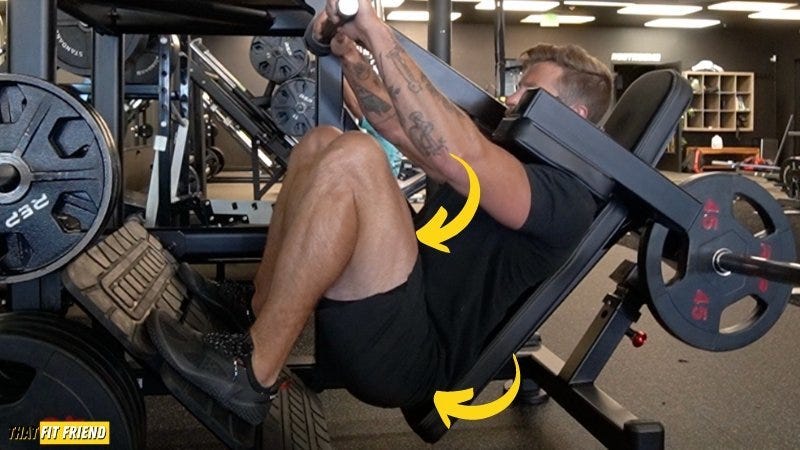
Additionally, the machines will reduce the demands from the core and lower back, making it easier and safer to isolate the quads and push each set closer to failure.
More knee bending allows the quads to stretch more under load, which results in a greater potential for growth (muscles grow best when stretched under load).
On the topic of athleticism, whether someone uses a squat machine variation or barbell squat variation, I firmly believe all of them can work to make someone stronger and more capable of doing activities they enjoy.
So long as you use exercises with a full range of motion and increase the resistance over time, someone’s general strength for sport will all be the same.
I would also posit that it would be hard to tell the difference performance outcomes for most people.
Take someone who did back squats, versus someone who did leg press; you’d have no idea who used what equipment when it came time to actually have them run on a field.
More research has been published on the topic, this one in particular compared barbell training to machines.
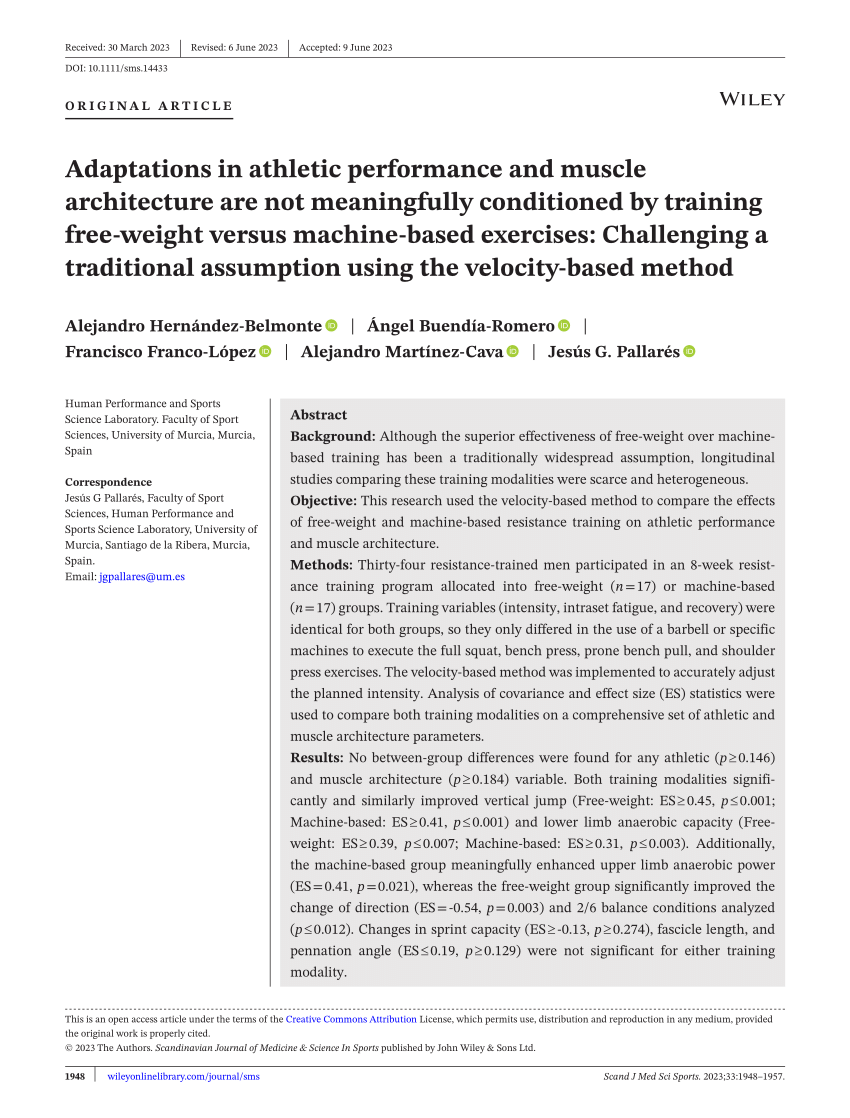
The participants trained 3 times a week, for 8 weeks. At the end of the 8 weeks, they tested sprint speed, vertical jump, counter movement jump, and change of direction.
The results were equal; when averaged out, both groups made improvements in the tested variables (remember this was ONE study, if this same result were replicated multiple times in a row, then it would hold much more weight).
The decision to include machines in your training program simply comes down to your goals and preferences.
After so many years of doing this, I consider range-of-motion and anatomical matching as being the most important considerations with exercise selection. Pick the exercises that work best for your body, can be progressed for a long time, and don’t cause pain.
That may be a back squat, or it could be a leg press. Both can work. There are no mandatory exercises, only patterns.
You could run all squat variations over and over again and still end up with jacked and powerful legs.
Myth #5: Females Have To Train Very Differently Than Men
Whether the goals are physique or performance-oriented, the differences between what a female will do in the gym versus what a male will do will not differ as much as many may say it be.
Some of the differences posited are:
1) Women should train with higher rep ranges and higher training volumes — There is no reason to exclude any rep range as the most growth-promoting strategies are going to incorporate all of them anyways. The body will respond to whatever stimulus you give it.
Regarding volume, the one study cited in support of higher training volume for women had a major flaw — basically they repeated a 1-rep max bench press (estimated from a 5-rep max test) with male and female groups at three different time periods after the first bout (4-hours post-test, 24-hours, and 48-hours). The males did not recover until 48 hours after the initial test, while the females recovered after 4-hours; if you train hard and you’re “100% recovered” after 4 hours, you did not train hard at all no matter what weights you used.
2) Exercise modalities — females actually CAN burn more fat with cardio but that doesn’t dismiss the importance of lifting when it comes to body recomposition. Whether you’re male or female, you’re going to need to incorporate both cardio and lifting for the fastest body transformation possible that also lasts.
3) And most notably, planning training specifically around female physiology.
The menstrual cycle has the potential to affect a female’s ability to train, so it makes sense on a surface level to accommodate for that when designing a program.
There’s been more interest in recent years about planning workouts to match different phases of the menstrual cycle, often called menstrual cycle periodization.
At its core, periodization describes how you structure your training in the grand scheme of things. This is a concept that was developed and applied in sports (most notably the Olympics) and became a mainstream topic in fitness discourse because of powerlifting and bodybuilding.
Powerlifters, Olympic Weightlifters, and Bodybuilders have applied periodization for years to add variety to their training, accommodate for real life, and match their capacity to train.
That variation might mean changing intensity, volume, or focus across weeks or months. When applied to women’s health, it usually refers to how you might adjust exercise type, intensity, and duration around the hormonal shifts that happen across the menstrual cycle.
The underlying hypothesis is that during your cycle, your body doesn’t respond to training the same way.
However, the effect of the hormonal variation on physical performance, as well as the impact of menstrual cycle-related symptoms, is only partly understood.
This graphic loosely illustrates some of the moving parts that need to be considered during the menstrual cycle:
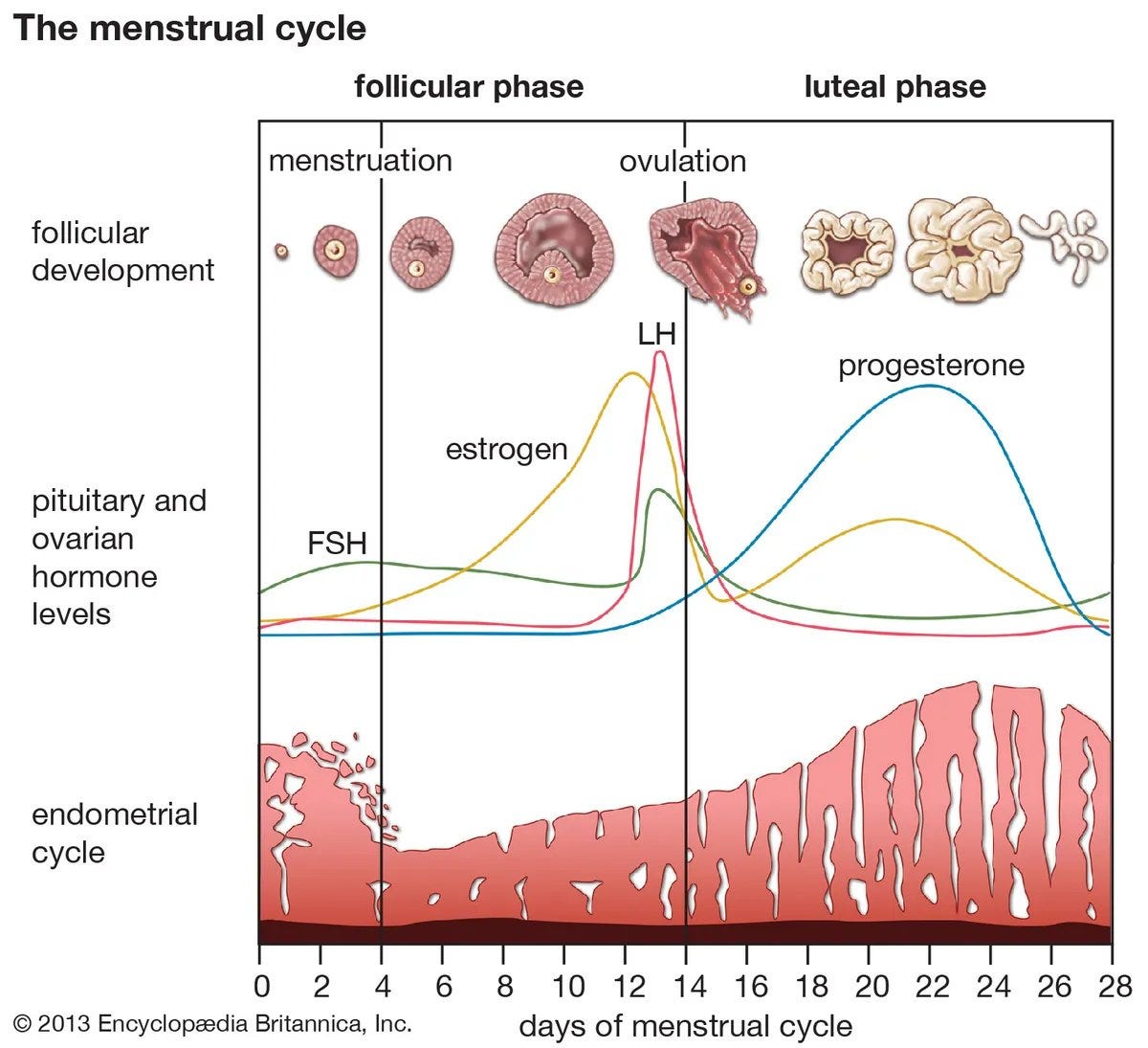
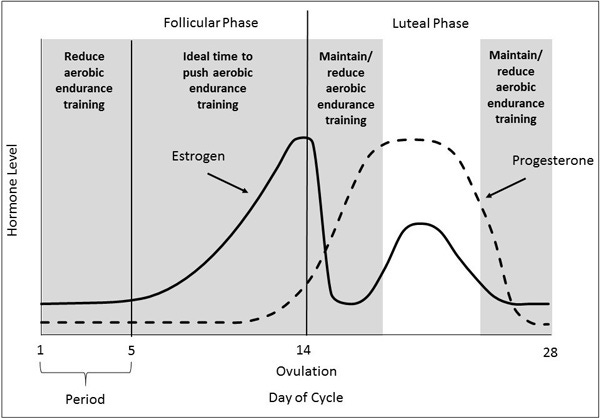
Before getting caught up in the research, understand some limitations in exercise science research:
1) There will be inconsistencies in study designs and methodologies.
2) Research will mostly report averages, and you won’t find a lot of data on each individual.
3) The populations used in the studies typically do not resemble you or do anything remotely similar to you at all. This can range from training programs, nutrition, and overall lifestyle. Even if some of these variables are controlled for, there is only so much a research team can do to standardize EVERYTHING.
This doesn’t mean that the studies on this topic are “bad,” it just means we cannot draw definitive conclusions to answer the binary questions we pose to process complex topics.
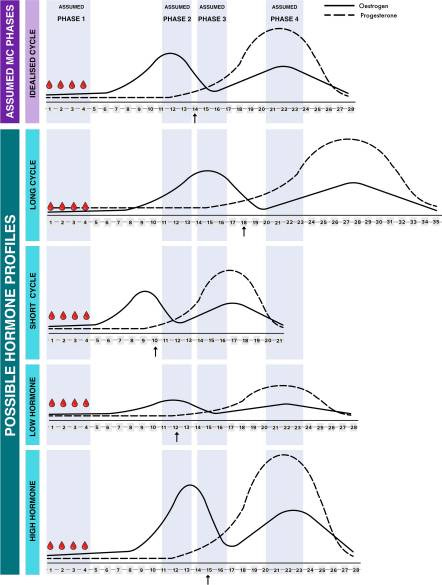
It is estimated that the ‘textbook cycles’ you see described in research actually represents as few as 10% of all ‘real world’ cycles. This illustrates how you cannot broadly apply a one-size-fits-all approach when it comes to menstrual cycle training adjustments as the timelines could vary quite a lot. What the data shows from studies like this is that there will be patterns, but individual responses may vary.
So in reality, it’s likely not necessary to make drastic changes to how you train during your cycle. Ultimately, you listen to your body and make adjustments that allow you to stay on the trajectory of your current plan.
Not feeling great on some days? Consider reducing the amount of sessions you train, reducing training volume per session, etc.
Myth #6: Choosing Exercises Based on Leverage
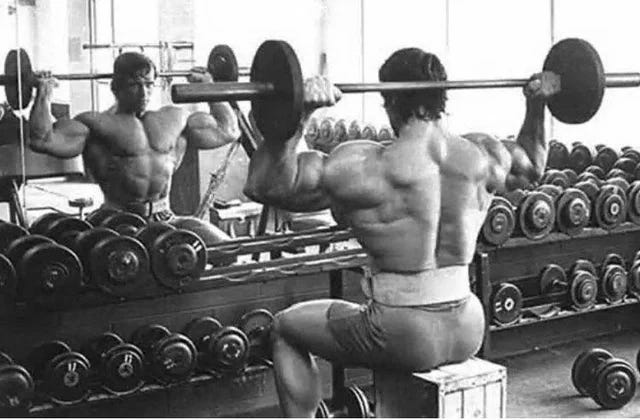
Notice that some of the most iconic bodybuilders ever never talked about leverage.
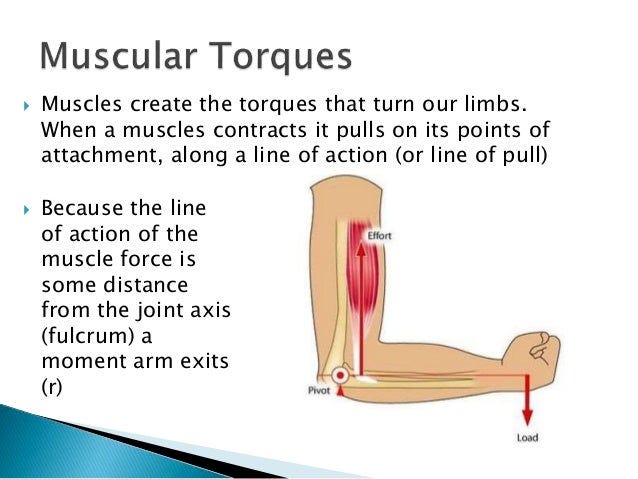
Leverage is the muscle’s ability to produce force.
It is represented by the internal moment arm, so as your internal moment arm increases, so does your force-production capacity.
Muscles produce rotational force because they rotate around joints, which is known as torque.
Here is that terminology visualized as it can be difficult to conceptualize:
For what’s otherwise a seemingly simply concept with clear implications for understanding how an exercise can train a muscle, scientists have delved into this topic many different ways that are otherwise not very helpful in terms of program design. But the “science-based lifting” crowd somehow snorted this one up like Colombian cocaine and ran with it.
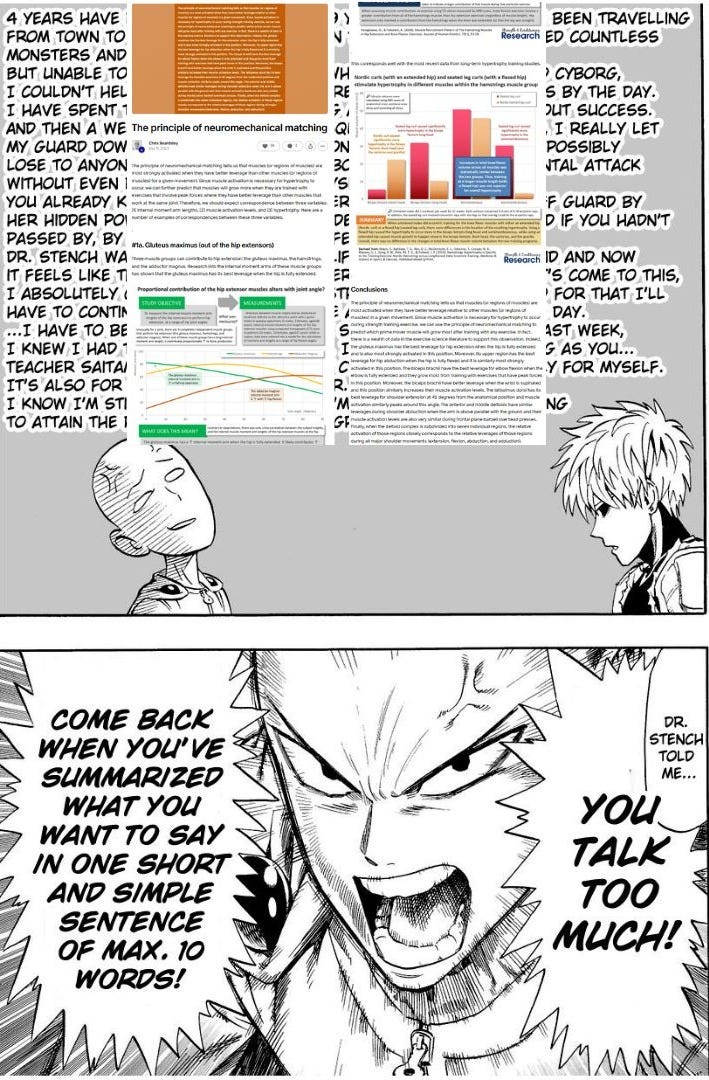
So these days you’d find a lot of content on this topic across Instagram and Tik Tok:
”This exercise is best for _____ because the muscle has best leverage here.”
Ignore. It’s not worth your time overanalyzing this topic.
Again, muscles grow best when stretched under load, it’s that simple.
The exercises that these people tend to recommend on the basis of leverage do not meet that criteria. Nor were they exercises prioritized by the bodybuilders who built their physiques on a wide variety of full-range of motion exercises.
Myth #7: You Need To Deload Every 4-6 Weeks
A deload is a period in which you reduce your training load, either reducing volume or intensity. You’re going to do less work and/or lift lighter to allow your body to recover when damage increases. Even when a strength athlete implements rest days, muscle damage can still gradually increase over time and whole-body fatigue can accumulate when consistently lifting heavy.
A strength athlete is more likely to use planned deloads than the average person looking to build their best physique. When training for strength, the primary driver of success is strength gains in your most important lifts. You have to perform these lifts and you have to get stronger. It is significantly harder to perform well on exercises when you’re fighting against high fatigue thus making a deload phase necessary. The deload phase will mainly involve a reduction in volume while maintaining higher average intensities; you’ll do fewer sets and use slightly less weight.
The deload phase can last any time duration you see fit. There is the commonly referenced “deload week” but physiologically, there’s nothing magic or special about one week.
Your primary objective for hypertrophy is to get stronger in all rep ranges for every exercise relevant to your desired look, but it doesn’t have to be specific to exclusively one exercise. For example, your quad growth can be driven just as much from leg pressing as squatting with a barbell.
You can modify your program to fit your needs. It is advised that you plan a deload phase in alignment with your life, such as planning to do fewer workouts while traveling. Other ways you could potentially deload are specified here.
The average person does not have the capacity to accommodate the training demands of a traditional programming scheme - overload, overreaching, etc.
It will not only make them feel worse, but also look and perform worse.
We know cortisol leads to more bodyfat on the waist, disrupts sleeping patterns, and destroys metabolic health. You will get weaker, look fatter, all at the expense of long training sessions that burn you out.
Knocked out with sickness for several days = deload.
On vacation doing hotel workouts = deload.
Life responsibilities taking precedence = deload.
Life itself is the built-in deload if you're a normal person who's existence doesn't revolve solely around training.
It's only the elite competitors and hobbyists that truly periodize their training the way you might have seen it illustrated in the textbooks and lectures. Their whole life revolves around training and competing and are in physical situations that permit the whole lifestyle to be run to a T.
Myth #8: Searching for a Perfect Program
There is only a perfect program for you, and that can only be discovered through personal trial and error.
You can only follow training programs and/or a trainer’s advice for so long before you need to take agency to solve unique problems you might come across in your training to continue making progress.
These can be observations such as:
1) What exercises you do (you might choose to do front squats over back squats because it doesn’t hurt your hips as much, and there’s nothing wrong with that).
2) Whether you should do more working sets for each exercise.
3) How many days it takes for a certain muscle group to recover from a session so you can customize how often you train it.
Insight comes from the cycle of using subjective experience to inform what you are trying and seeing if it works out in practice.
Persistence without insight will lead to the same outcome.
This is why lifting weights can be so truth-telling.
You either get results or you don’t.
There is no fault in hitting a wall.
You just have to find the lesson in the failure.
I have watched many people put their faith externally into a coach, program, or philosophy. These will get the process started and maybe get them far. But the reality is there is no set template that will completely unlock their full potential inside them.
I’ve done multiple programs and systems such as Wendler’s 531, Candito powerlifting, Juggernaut Training, higher volumes, low volumes, etc. The list goes on. All that experience allows me to conclude what genuinely works for me because the extremes can reveal a lot.
So stop wasting your time looking for the perfect program before stepping foot into the gym.
Start with one, and go from there.
Myth #9: “Perfect” Resistance Profiles
Content creators know they can bring in the views by posting a tier list of the best and worst exercises. Not only are most of them hilariously wrong, they also give you the wrong impression about how to choose exercises.
While resistance profiles are an important consideration, do not put them on a pedestal when choosing exercises, especially if you do not have access to a wide variety of equipment.
Let’s illustrate it this way:
If you were to do a lateral raise with a dumbbell to train the lateral deltoid, this variation challenges the muscle most where it shortens (contracts). This can be a downside as we ideally want to challenge the stretch more.
If you were to do the same movement pattern with a cable, the deltoids would get challenged more in the stretched position, but you might not get as much resistance during the negative (eccentric) portion of the lift as you would with the dumbbell.
And if you were to use a dedicated machine to train this pattern like this Prime version does, you could bias many different aspects of the lift with the unique feature it offers (think of the mode selector in a sports car and that’s what this toggle can do to the lift):
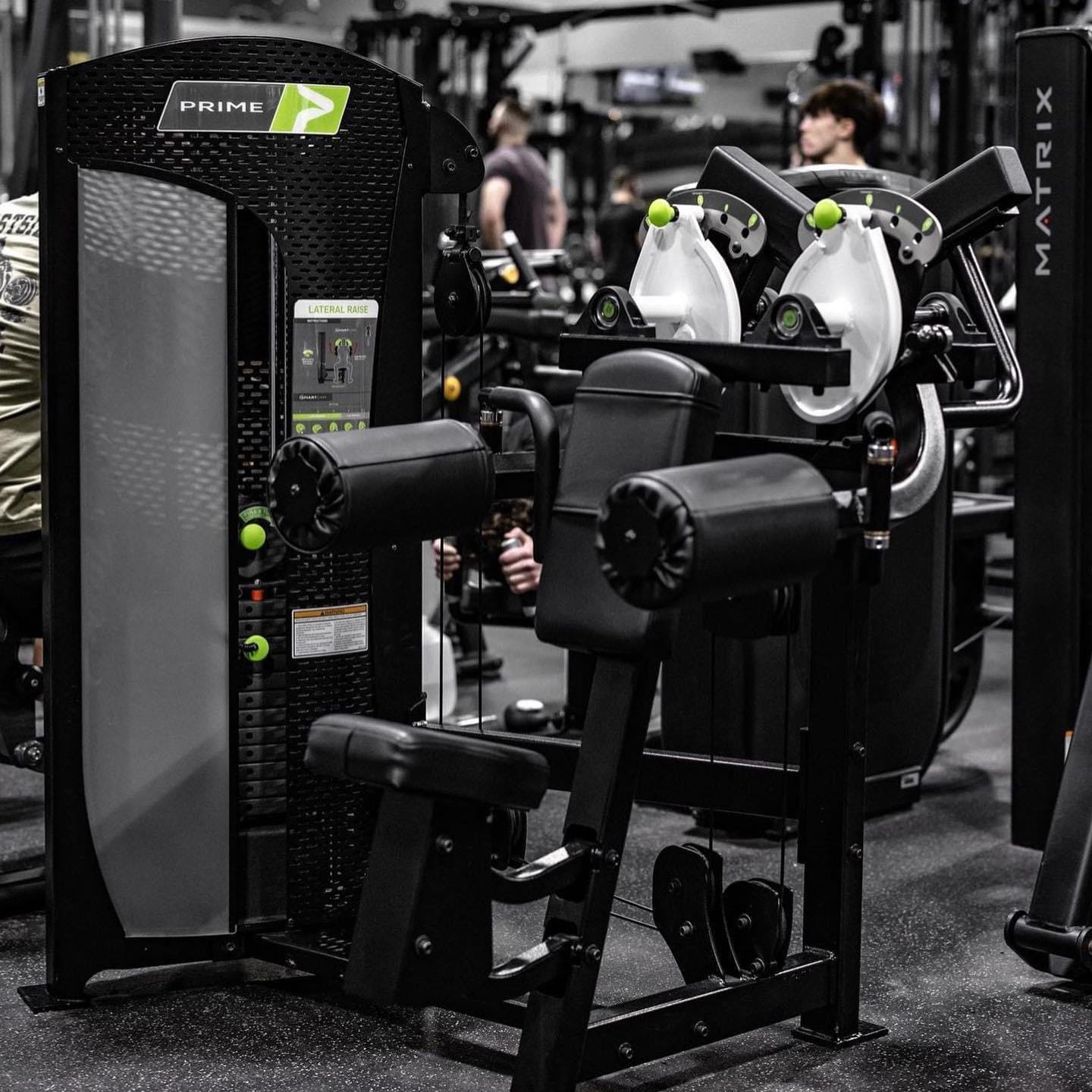
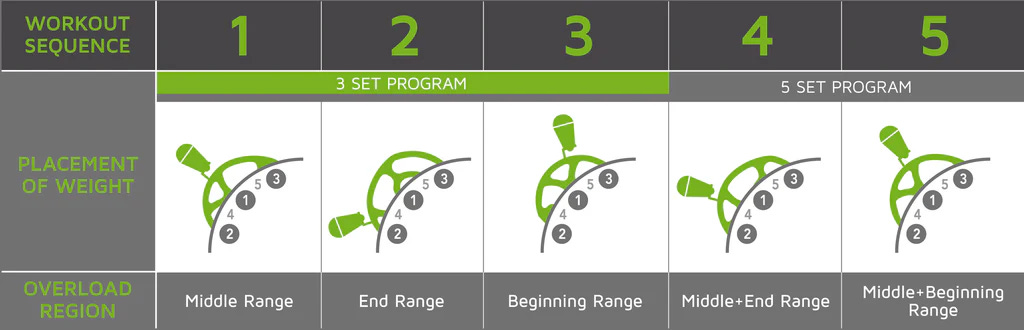
In the end, you’re going to use what’s available to you and what you feel best with. There are no perfect resistance profiles, only tradeoffs that you have to consider with each exercise.
Using a combination of free weights, machines, and cables fill in the gaps that each type on its own leaves.
This is an area that gets people over-thinking, and under-doing. Just lift.
Myth #10: Having to be “Science-Based”
The science of building muscle and getting strong is not complicated, it is very straight forward to learn and apply.
People just don’t perceive it that way, so they waste years trying to piece together their own plan with random, incoherent puzzle pieces from whichever source they draw from and just end up going no where.
If you want to find that “perfect plan” for you, you simply start with A PLAN and follow it the entire way through before reevaluating your progress.
Someone could start with a simple 4-day split where you train upper body and lower body in a set order such as:
Day 1: Upper Body A
Day 2: Lower Body A
Day 3: Rest
Day 4: Upper Body B
Day 5: Lower Body B
Day 6: Cardio
Day 7: Rest
And after 16-20 weeks of that, they notice that their lower body made tremendous progress, but their back musculature may be lagging.
So guess what? The better plan for this person involves realigning the split to prioritize THE BACK.
Science, theory, and anecdotes are all great assets to your decision-making, but ultimately it’s going to be the results you get that will guide your efforts.
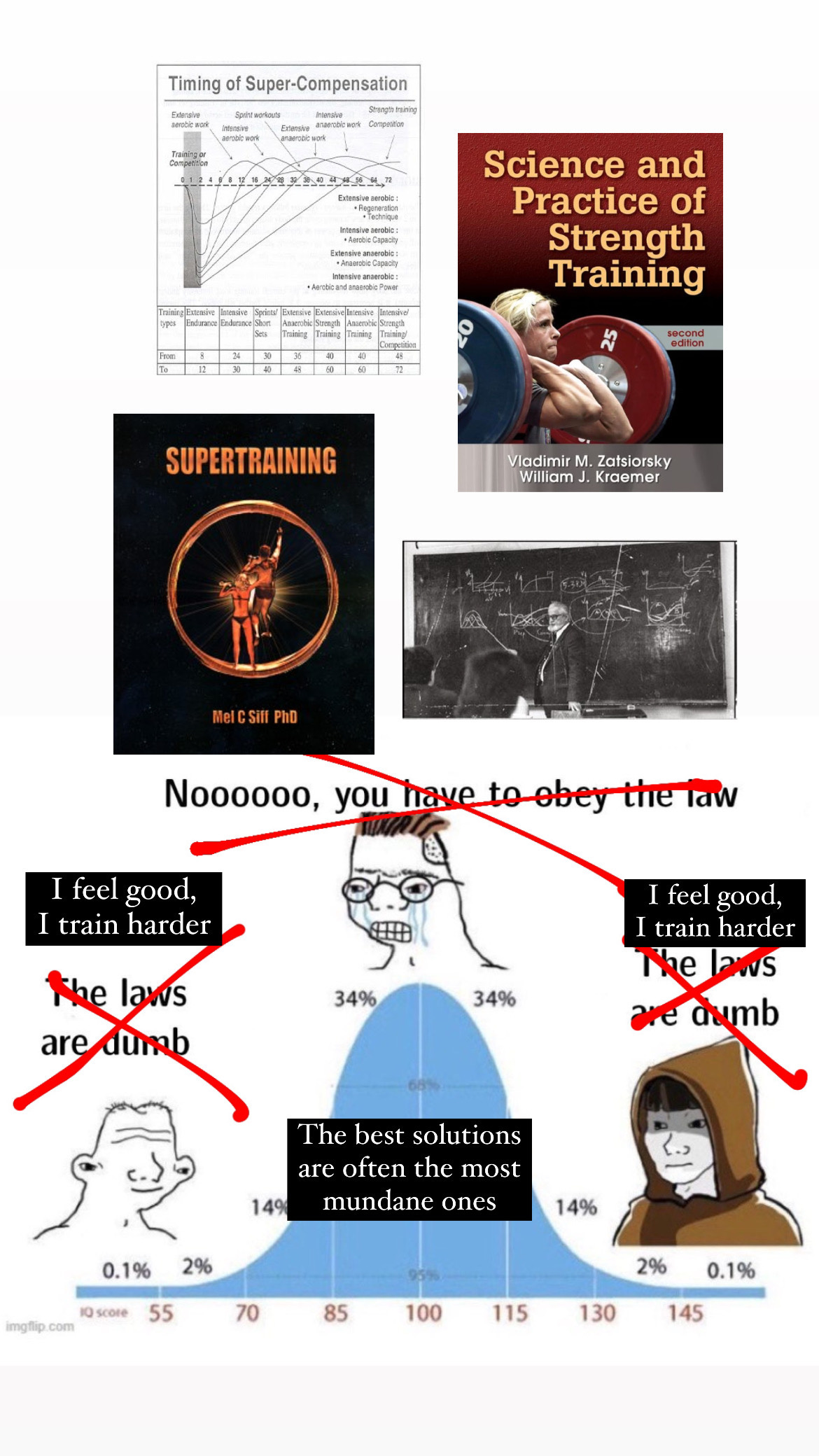
Don’t need to student-loan yourself into a PhD in Exercise Science to be an expert at this stuff.
Iterative self-experimentation is how you keep winning at this game.
Again, social media makes you think that you must be training a certain way:
”Low reps only, 4-6 per set is best.”
”Only one set to failure bro.”
Cannot emphasize how important it is to understand that pretty much any training can work; you lift weights with intensity and accuracy, and those lifts will progress and translate into growth.
It will just look slightly different for everyone because of the multitude of individual factors that can influence programming.
And lastly, there really is nothing new under the sun in the training realm. Arguably all of the territory is charted out, and basically anything you do is simply a slight permutation of already established practice.
I am not the one who coined this phrase and I can’t trace down who said it first but:
”Bros don’t study science. Science studies the Bros.”
Absolutely Sensational