
Should You Reverse Diet?

Should You Reverse Diet?
You’ve reached the end of a fat loss phase. You’ve achieved your goal. No more dreadfully boring meals. You looked fabulous before but now you look extra fabulous; but you are also in a position where you could easily undo all that hard work you put in.
I don’t believe there is a perfectly analogous scenario to illustrate the the preparation needed to diet and successfully transition out of it but I like to think of it like this:
When we diet, it’s going to feel like a flight to East Asia. It’s a long flight to navigate in itself but we also have to land the plane properly too.
Someone can diet down to their designed physique successfully, but it’s the weeks after the diet that can completely undo the hard-earned progress because they approach the post-diet phase without knowing how to strategically readjust their nutrition strategy.
People can survive rigid diet plans and even get results, in spite of borderline abuse, not because of it. Low calories suppress output, reduce recovery capacity, and create the perfect rebounding environment. Hormonally we have thyroid, leptin, and ghrelin, to name a few, and these hormones can be altered in response to energy balance and carb feedings.
This is why cookie cutter approaches, like the generic low-carb approaches create the same cycle:
”Drained” look
Worse physiology
No lifestyle structure
No identity reinforcement
So when calories come back up, fat regain is amplified because no underlying physiology was “potentiated” for the surplus. A sustainable method looks very different as it should incorporate elements such as auto-regulation, phase potentiation, and periodization of training and nutrition strategies.
This series will delve into the science of reverse dieting and illustrate a fundamentally-sound strategy to successfully transition out of your diet without regaining body fat.
It is highly recommended that you read this article first if you are unfamiliar of how our bodies change during a caloric deficit, as this article is essentially a follow-up to it:
Your maintenance calories at the END of a diet are NOT the same as when you started. You will have some degree of metabolic adaptation from the prolonged caloric restriction and a major reduction in your resting metabolism rate (the calories you burn keeping yourself alive at rest).
It is much harder to remain leaner if you naturally burn fewer calories at rest and during exercise.
In addition, you’re going to be very hungry as the caloric restriction will trigger hormonal irregularities in your body that will alter your psychology and drive you to eat more food:
Higher ghrelin → more hunger
Lower leptin → less body fat → more hunger
Lower PYY (peptide YY) and CCK (Cholecystokinin) → less appetite suppression
Lower insulin → potentially lower leptin
Lower amylin → gastric emptying becomes faster
These hormonal changes can persist longer than one year. This means if you don’t do something about it, your hormones will be fighting against you long after your fat loss phase has ended thus encouraging weight re-gain.
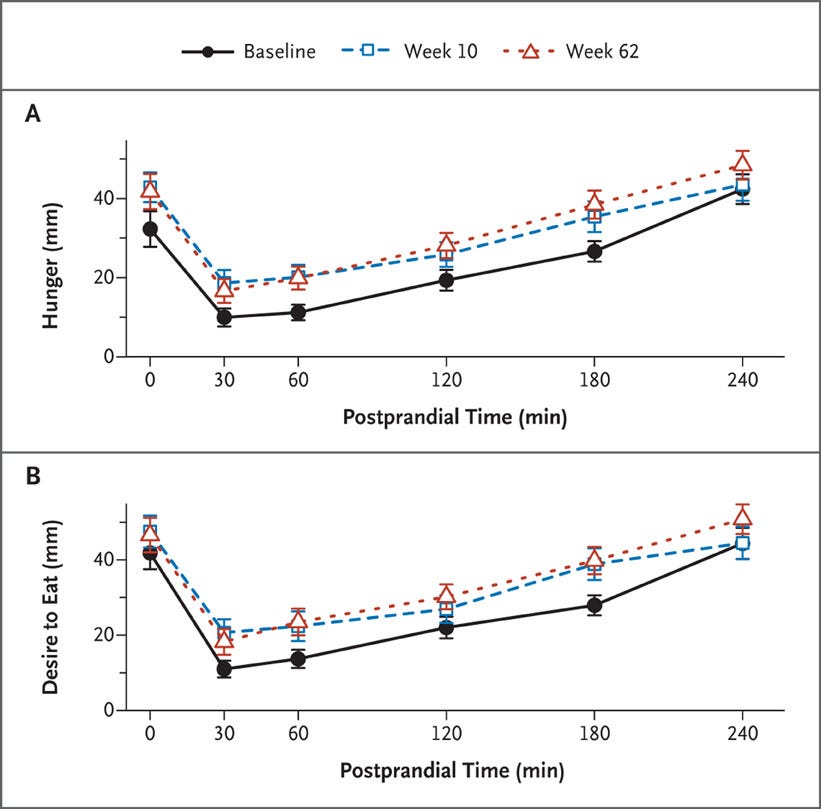
It is disadvantageous for your physical and mental health to fight an uphill battle against your natural physiology; therefore, you have to embrace eating.
Not sure where this theory came from, but Reverse Dieting was proposed as the definitive strategy to use after a fat loss phase. The idea was that you should increase calories by 100 each week after your fat loss phase ends to mitigate muscle loss and restore metabolic capacity with minimal weight gain.
Let’s parallel a scenario:

The hot tub at your Korean spa.
When you stay in that scorching hot room for too long, that is bad for you. That’s what staying in a fat loss phase for too long parallels to.
Would you just come out of it or run right to the next door cold room to cool off?
Correcting metabolic damage is similar to the aforementioned scenario.
Would you add back calories slowly and thus continue to be at a deficit and continue to starve yourself just to a lesser degree?
Would you continue hormonal dysfunction, chronic fatigue, deterioration in bone health, suboptimal training performance, reduced libido, fluid retention from increased cortisol, reduced caloric expenditure from a lower RMR, poor sleep, increased hunger, and the potential of disrupted menses?
Or would you add back calories to reach a healthy energy balance and thus normalize your hormones, sanity, and end your calorie restricting starvation phase? You’d do the latter.
Let’s also dive into the research on this topic:
The Research
The infamous Minnesota Starvation Study: you definitely do this study today due to Big IRB but this is perhaps the most practical and applicable fat loss research study that’s ever been done.
36 young adult men participated in this study that ended up lasting over 1 year and had all food consumption recorded and monitored in a lab. Exercise had to be performed in the lab too. Participants had signed up for this as a research experiment that would be applicable to military dieting practices.
For the first 12 weeks the men ate a control calorie intake of 3600 calories per day. The men had a resting metabolic rate of about 1600 calories after the control period.
Then came a 24-week starvation period where the men ate only ~1580 calories per day. After the end of the 24 weeks, the men had an average RMR of about 1000 calories burned at rest per day.
Then came the Reverse Diet that was labeled as a restricted refeed/restricted rehabilitation period. Men were divided into 4 groups with 8 men in each group (there were originally 36 men recruited but some men were disqualified from the study because they got caught sneaking food).
All secondary analyzes done on the original study show increasing levels of calorie intake (they may differ by a few hundred calories in each group but the concept is the same: they restricted the men to different levels.
One secondary analysis says subjects consumed:

Group 1 = ~2380 calories/day
Group 2 = ~2720 calories/day
Group 3 = ~3060 calories/day
Group 4 = ~3400 calories/day

Another secondary analysis says subjects consumed:
Group 1 = 2000 calories/day
Group 2 = 2263 calories/day
Group 3 = 2621 calories/day
Group 4 = 2849 calories/day
Differences aside, you see a varying level of caloric intake which is lower than the initial caloric intake. All groups (8 men in each group) were still undereating relative to the control calorie intake of 3600 calories/day. The restricted refeeding period lasted 12 weeks.
This same secondary analysis also calculated a percentage of resting metabolism regained during the controlled refeed relative to the metabolism decreased during the starvation period and found that none of the groups’ resting metabolic rates were fully restored to baseline levels during the refeed despite the increments in food intake and resulting impact on metabolic rate.
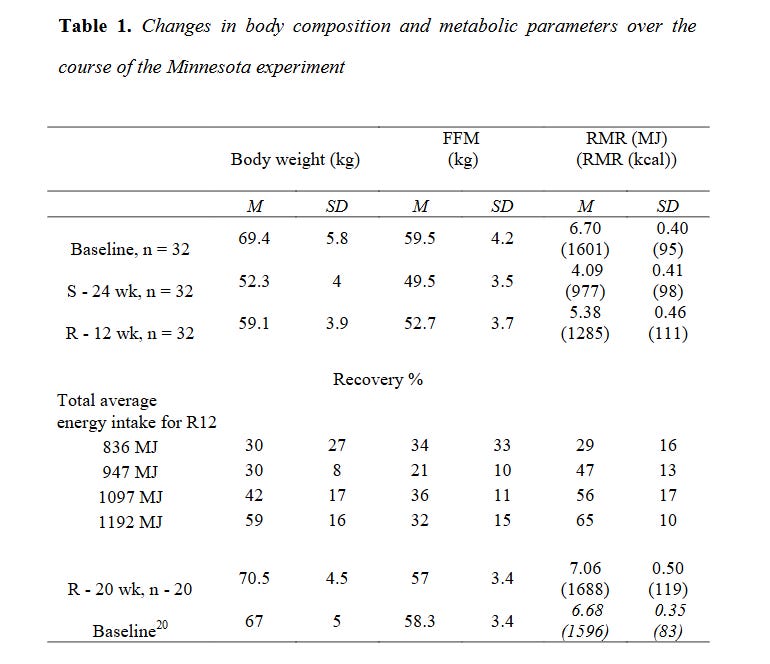
The group consuming the lowest energy intake recovered 29 ± 16% of their RMR.
The group consuming slightly more calories recovered 47 ± 13% of their RMR.
The group consuming slightly more calories recovered 56 ± 17% of their RMR.
The group consuming the highest calories (but still less than the control period) recovered 65 ± 10% of their RMR.
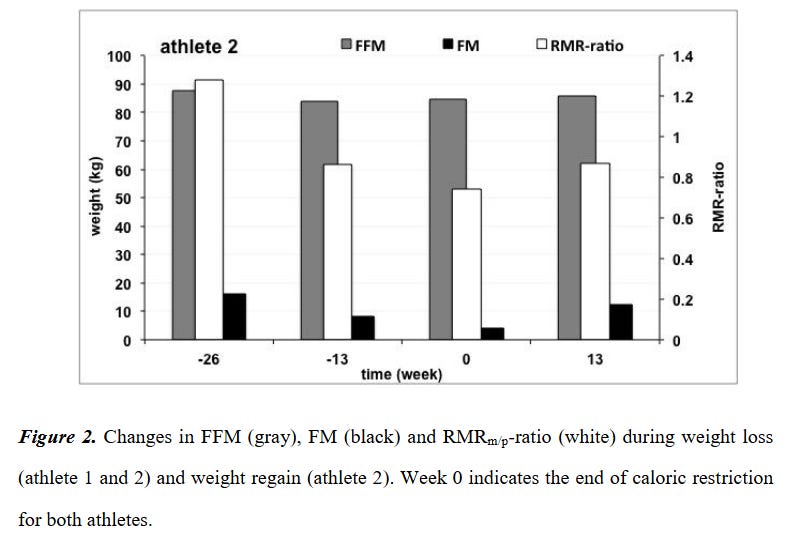
Next, all subjects were allowed to eat ad libitum (as much as they wanted) for 8 weeks; the actual amount that they were eating was not specified, unfortunately. During this period of unrestricted eating, subjects did NOT fully recover the lean mass lost while dieting, but did manage to recover their metabolism enough to where on it was generally higher than baseline measures.
Why do we see that our resting metabolic rate responds positively to food intake?
The answer is the satiety hormone leptin.
During calorie restriction leptin is inversely related with hunger, independent of body weight or fat lost during calorie restriction.
Low leptin = hungry
High leptin = full and satiated
Leptin influences far more than just hunger, as higher leptin levels are associated with:
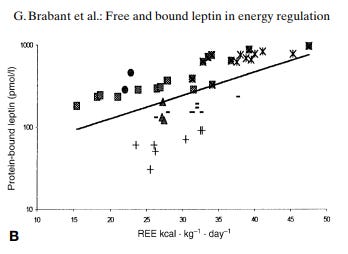
1) A higher resting metabolic rate.
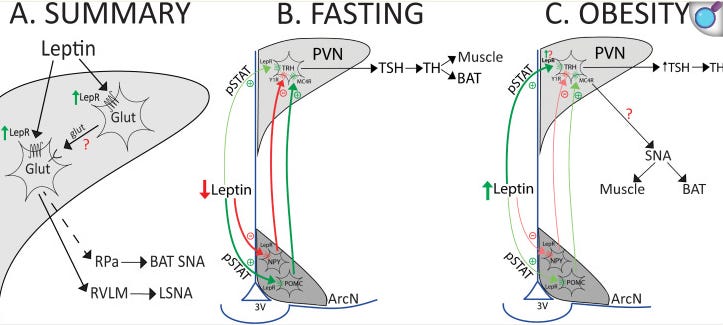
2) Increased sympathetic nervous system activation via regulation of the hypothalamic-pituitary-adrenal axis.
This impacts cortisol, aldosterone, androgens, epinephrine and norepinephrine, as well as normalized thyroid and gonadal function.
So in order for your body:
1) To think it is at energy homeostasis at your new leaner weight
2) To increase its resting metabolic rate after caloric restriction
3) To repair low thyroid hormones, elevated cortisol, low sex hormones, and impaired reproductive health…….
……you need to normalize your leptin as soon as possible.
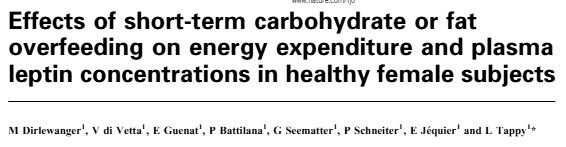
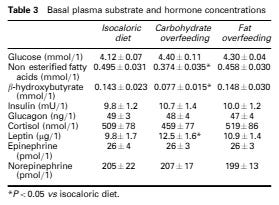
The goal of this study was to determine the effects of excess carbohydrate or fat intake (+40%) on plasma leptin concentrations and energy expenditure.
Ten healthy lean females were studied:
1) during a 3-day isoenergetic diet (ISO);
2) during 3-day carbohydrate overfeeding (CHO OF) of 40%
3) during 3-day fat overfeeding (FAT OF) of 40%
Compared to the isoenergetic diet, carbohydrate overfeeding, not fat overfeeding, was able to drive a 28% increase in plasma leptin concentrations. Furthermore, 24-hour energy expenditure was increased by 7% after carbohydrate overfeeding compared to isoenergetic conditions.
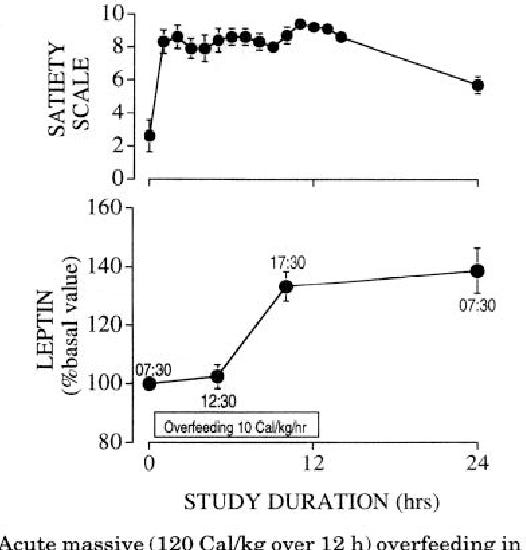
And to illustrate an extreme example for fun, this study had two experiments consisting of chronic and acute overfeeding, with the acute overfeeding portion being the one of interest as it simulates how the average person approaches a refeed day (making it a cheat meal).
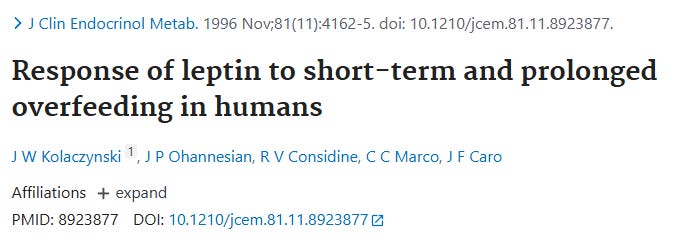
8 healthy overweight adults consumed 120kcal/kg at the rate of 10kcal/kg/hour. To put this in perspective:
For an 80kg person eating 120kca/kg/hour this would result in almost 10,000 calories.
The diet consisted of fast-food eaten across three meals with a ratio of 55% fat, 35% carbs, and 15% protein. Additionally, cashews and milk shakes were given between meals.
I don’t need to tell you why this is a bad idea. But anyways, the authors found a ~40% rise in leptin between hours five and ten after eating, which persisted until the next morning.
What about eating at maintenance to restore leptin?
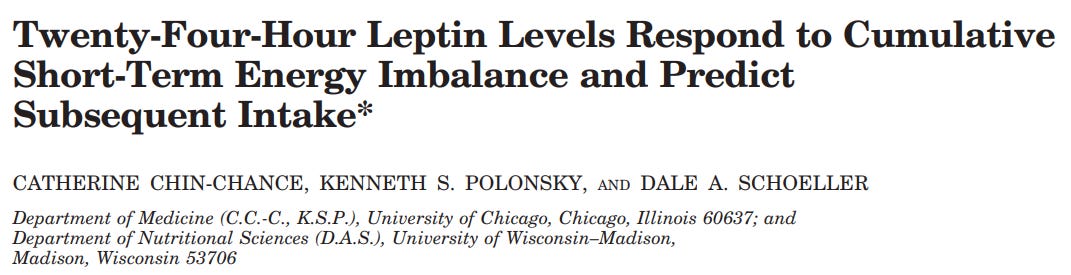
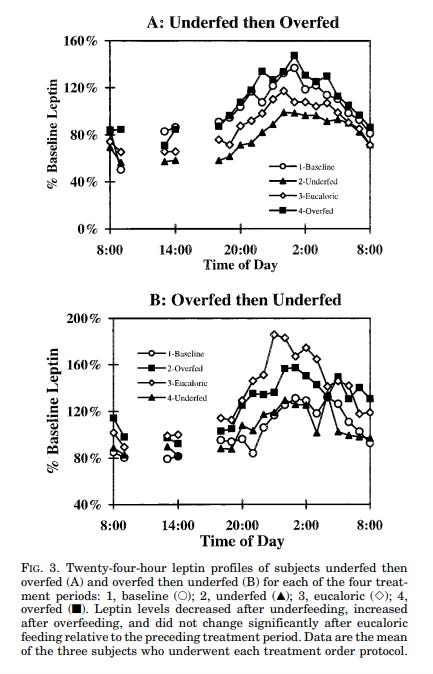
There were six young, healthy, nonobese males in this study. The 12-day study was composed of four periods of 3 days each.
The periods consisted of baseline, overfeeding (130% TDEE), and underfeeding (70% TDEE) which were separated by a eucaloric (100% TDEE) washout period. After each period participants were offered an ad libitum breakfast buffet.
Leptin levels were measured throughout the day during each period.
After underfeeding, leptin levels during the washout period were 88% of those during baseline compared with 135% following overfeeding. Leptin levels did not return to baseline during the washout period when intake returned to 100% TDEE, instead only they returned to baseline only after participants crossed-over to complementary dietary treatment that restored cumulative energy balance.
Again, think back to the analogy: we just need to get out of the heat and cool off. It is likely in your best interest after a significant fat loss phase to just cool off immediately and drive a surplus of carbs.
32 normal weight men underwent this experiment and all food was provided and eating was supervised which is something you can’t say for many training and diet studies. These 32 men were measured at baseline:
1) Then, 1 week of overfeeding was done 50% increase in food over energy needs.
2) Subjects saw an increase in body weight, leptin, insulin and a decrease in ghrelin (ghrelin drives hunger).
3) Next, subjects were “starved” and given only 50% of their baseline energy needs for 3 weeks.
4) Metabolic adaptation had already set in by day 3 of starvation.
5) Finally, subjects were refed for 2 weeks at 50% surplus of baseline energy needs. Subjects gained a little over 7lbs and all hormones returned near baseline levels.
By the end of the 3-week calorie restriction phase, subjects:
Lost 13 pounds.
Decreased their RMR by 266 calories.
Experienced a 44% decrease in leptin.
Experienced a 54% decrease in insulin.
Experienced a 11% decrease in testosterone.
Experienced a decrease in skeletal muscle mass by 5%.
Experienced a 39% decrease in T3 (T3 raises energy expenditure).
Subjects still made tremendous weight loss progress (net drop of 6lbs from restriction phase through the refeed) and normalized hormones within 2 weeks. You do not have to refeed at a 50% caloric surplus but you can see how drastically increasing food enables your metabolism and overall hormonal health to return back to pre-restriction levels much quicker.
The Strategy
Based on the research we have, it’s likely in our best interest to not do a slow Reverse Dieting approach or go straight into an energy balance/maintenance calories as soon as we finish dieting.
Your body senses how much energy you have available. If you return to energy balance right away, your body will need time to sense there’s enough energy available. A couple days eating at energy balance won’t convince your body that there’s enough fuel available after an extended period of restricting food.
And based on the data, it might take weeks for your body to sense you finally have enough fuel coming in, especially if you’ve endured a very large calorie deficit during your shred.
Based on personal experience, planning a surplus and a taper in calories is the best balance between expeditiously returning to optimal hormonal levels and physiological function while being practical and limiting potential fat regain as our fat cells are especially sensitive to a surplus in fuel availability after a shred.


In my last days of this shred, I was averaging 1600 calories per day, with my new energy balance falling somewhere around 3000-3200 calories.
The approach was as follows:
1) Start by consuming a 15-25% energy surplus relative to your estimated energy balance for 2-4 days.
The magnitude of the surplus depends on a variety of factors but in my case I went with 25% as I’d been dieting for 6 months. At that point I’d tell people in a similar situation to just full send it.
So back in August, this came out to 4000 calories, with much of it coming from carbs (around 700-750 grams daily), lower fat (30-40 grams), and moderate protein (180-200 grams).
Personally I’d lean towards lower fats because again, fat cells are very sensitive to an energy surplus especially from dietary fat which requires less work to be stored as adipose tissue compared to carbs.
2) Taper the calories by consuming 80-90% of your new estimated energy balance/maintenance calories for at least a week.
3) Make another slight increment by consuming 90-100% of your new estimated energy balance/maintenance calories for at least a week.
4) From here, it’d be advised to go into a surplus with a more balanced macronutrient distribution (higher carb, moderate fats, moderate-to-high protein).
You can adjust the time spent in each phase (either adding more time or reducing time) based on how you’re responding and what your specific desires are. You should be excited to see yourself in the mirror regardless of what your scale numbers tell you because you might see a 5-10lb increase the next day but look stronger, more vascular in the mirror compared to your last days in the shred because of glycogen replenishment and cortisol reduction.
Emphasize the Micronutrients
One of the biggest consequences of caloric restriction is the decrement in health as a function of progressively reduced micronutrient intake that inherently comes with diet food and examples of this are:
Zinc
Choline
Copper
Calcium
Selenium
Vitamin C
Potassium
B-vitamins
Magnesium
The list is extensive, and all of these are critical for cell function and ultimately influencing how the incoming carb-surplus gets used. For one, the electrolytes govern intracellular hydration and electrical gradients that literally pull water into the muscle cell. Have those dialed in, and the influx of carbs can effectively refill glycogen, amplify the sodium/potassium pump’s action, and in turn drives nitric oxide release, improving vascular tone and nutrient delivery.
The most common mistake people make in this phase is indulging in junk food and while that’s fine for a meal or two, don’t make it a habit as that will just undo all the hard work you put in for months within days.
Emphasize micronutrient-rich foods to restore physiological function to the fullest and drive better performance in the gym. And because many vitamins are fat-soluble and cell membranes are made up of fats, it is recommended that you don’t keep fats too low for too long.
Training Adjustments
Won’t go too in depth over some of the adjustments I would make to training, but personally I wouldn’t rush into training extremely hard again when coming out of a deficit and would use this phase as a time to deload:
Fewer heavy days (3-5 rep range)
Reduced training frequency
Fewer intensity techniques
Less cardio
To name a few. We need to provide an opportunity for the body to recover and shifting into 7th gear with our training likely isn’t the best call.
Summary
You do not need to Reverse Diet. The weeks you spent on doing something with very little ROI could have just been spent in a surplus for more productive training progress which ultimately translates to the physique.
Rapid (rather than slow and gradual), strategically controlled, calorie increases are far superior to reestablish healthy hormonal normality if you’ve been undereating by >400 calories on average per day.
1) You’ll increase your RMR quicker with the expedited rebound of thyroid and leptin levels.
2) You’ll burn more calories in the gym as your training output will be much greater.
3) Burn more calories after the workout ends recovering from the more demanding training.
4) You’ll burn more calories throughout the day because you won’t be a tired sloth (that’s pretty NEAT).
5) You’ll increase your energy expenditure via the greater thermic effect of food (greater digestive demands).
Let this all be another lesson in why you need to embrace food, specifically carbs, as an investment in your best self.
Until Next Time,
Wong